
Three decades did more for the leather jacket than any century before them. Between 1960 and 1989, the same hide that had once meant a soldier’s coat or a biker’s armour turned into couture, then counterculture, then pure luxury, often all at the same time. To follow vintage leather jackets through the sixties, seventies and eighties is to watch fashion argue with itself, with leather sitting calmly in the middle of every argument. Here is how the material grew up.
In thirty years leather went from rebel uniform to runway royalty, and somehow kept both crowns at once.
The 1960s: leather finds its own voice
In 1960, leather design came into its own and enjoyed a wave of popularity that ran right across the world. For the first time it was not borrowed from workwear or the military. It was wanted for itself, for the way it caught light, held a shape and felt expensive even when it was not.
Couture takes notice
Bonnie Cashin stayed at the front of American leather design, famous for mixing leather with knit and fabric in a way nobody had quite tried before. In Europe, the great houses decided leather deserved a place beside silk and wool. Nina Ricci, Manuel Pertegaz, Rudi Gernreich and Yves Saint Laurent each took the material to the level of couture.
The results were anything but plain. In 1964 Nina Ricci designed a floor length leather evening coat whose very simple shape was lifted by striking gold embroidery. The Viennese designer Rudi Gernreich, always drawn to unusual materials, went to the jungle in 1966 with a playful stencilled, hair on calfskin suit. Because so much of the finest leather was produced in Spain, it was only natural that Spanish designers built it into their collections, and in 1968 Barcelona’s Manuel Pertegaz created a modern pair of brown leather chaps fixed to a belt. That same restless spirit ran through Yves Saint Laurent, who built his Africa collection in 1967 and introduced the safari suit to high fashion in 1968, with an early forerunner cut in sleek, polished black leather.
The handmade boom
While couture climbed, the street pulled in the other direction. An abundance of leather clothing flooded the market, carried in large part by the hippie movement. Small boutiques sprang up everywhere, and they prospered on craft rather than labels. Their leather was fringed, beaded, braided, hand laced and painted, each garment shaped by hand and never quite repeatable.
That handmade energy is the true root of the bohemian leather look, and it never really left us. A piece like the fringe leather motorcycle jacket carries that 1960s boutique spirit straight into a modern wardrobe, all movement and edge without a hint of costume.
The 1970s: rebellion, glamour and the suede decade
If the sixties gave leather permission to be beautiful, the seventies gave it room to be loud. The decade pulled in several directions at once, and leather followed every one of them.
The safari thread that Saint Laurent had started kept growing, and soft suede became the fabric of the era. Belted jackets, fluid coats and easy trucker shapes in earthy tans and browns matched the decade’s love of natural tones and relaxed tailoring. Suede felt grown up and a little bohemian at the same time, which is exactly what the seventies wanted.
Disco then gave leather a glossier face, all sheen and confidence under a mirror ball, while the biker jacket carried on as the steady backbone of rock and roll. By the end of the decade punk had seized the same black motorcycle jacket, covered it in studs and zips and turned it into a banner of refusal. One silhouette, two opposite meanings, both true at once.
Music kept feeding the look. Glam rock draped leather in glitter and swagger, with stars like David Bowie proving a jacket could be theatrical as easily as tough. At the same time the new wave of designer ready to wear reached the high street, so a well cut leather piece was no longer the preserve of couture clients. It hung on rails where ordinary shoppers could find it, which spread the seventies leather habit far wider than any single subculture could.
Through all of it, suede kept its quiet hold on the decade. A clean, modern take such as the women’s suede trucker jacket shows why the texture has never gone out of style. It softens a look without weakening it.
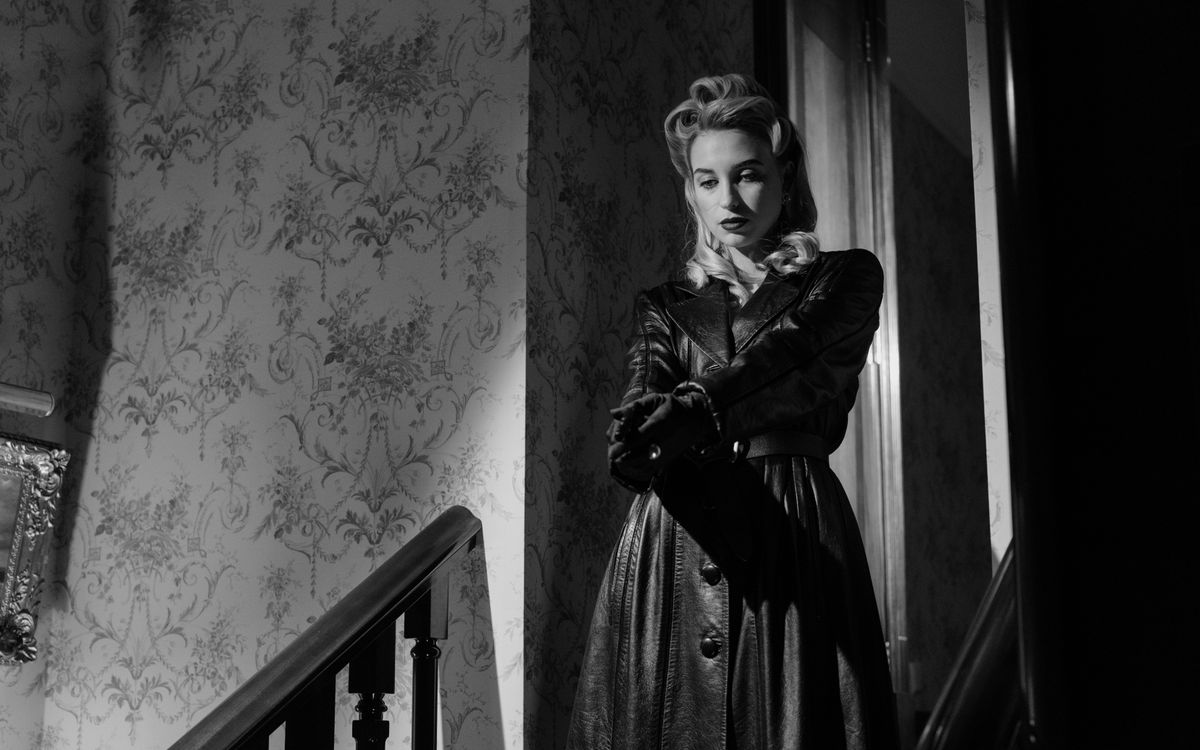
The 1980s: leather as luxury
The eighties changed the question entirely. Designers no longer asked whether leather could be elegant. They treated it as a fabric like any other and used it without limit.
Skin size no longer a limit
In the 1980s designers created luxury clothing in leather and suede that consumed vast amounts of skin, working it as freely as cloth. Skin size stopped being a constraint. Larger pig and cow skins grew increasingly popular as tanneries around the world learned to copy the rich, supple hand of the finest European tanned lamb leathers and suedes. Suddenly almost any garment could be cut, and almost any look could be reached.
The European vanguard
French, English and Italian designers led the way, inventing some of the most creative and most wearable leather clothing the world had seen. Giorgio Armani, Claude Montana, Azzedine Alaia, Emanuel Ungaro, Valentino, Anne Marie Beretta and Vivienne Westwood all stood at the front of the movement. There seemed to be no limits at all. Anything that could be done in cloth could now be done in leather.
The tanneries fed that ambition. The various weights of skin, the vast assortment of colours, the treatments, embossings and prints turned leather into a designer’s dream. It became a design material that signalled wealth and taste, and that meaning locked it firmly into the luxury market, where it has stayed ever since. The structured, confident tailoring of a women’s black designer leather blazer is a direct descendant of that decade, when a sharp leather jacket said as much about status as any silk dress.
American innovation
Across the Atlantic, a group of American designers worked just as heavily in leather and pushed the craft in surprising directions. Lisandro Sarasola, North Beach Leather, Francesca Sterlacci, Adrienne Landau, Alicia Herrera and Michael Kors all built reputations on it. They invented techniques that still sound ambitious today, including Sterlacci’s leather lace, Sarasola’s leather painting and Landau’s woven fur and leather scarves. Where Europe brought couture polish, America brought invention, and leather gained from both.
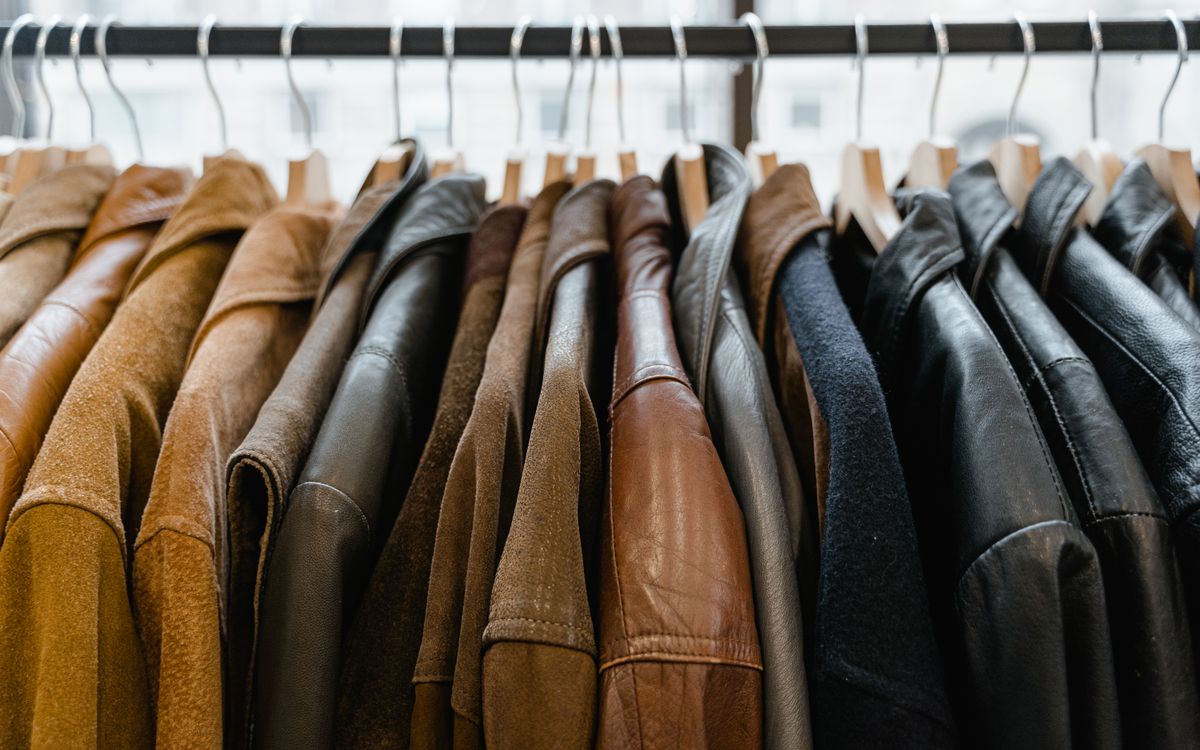
How to wear these decades now
The beauty of this history is that you can borrow from any part of it. For a sixties mood, let a fringed jacket do the talking over a plain dress or straight jeans, and keep the rest quiet so the movement reads as craft rather than fancy dress. For seventies ease, lean on suede in warm tan and brown, layered over knitwear with relaxed trousers, the way the decade liked its tailoring loose and lived in.
For an eighties edge, reach for a sharp leather blazer and treat it like a power piece, shoulders clean and lines confident, balanced with something soft underneath. The trick across all three is restraint. Leather already carries decades of attitude, so one strong piece worn with calm basics says more than a head to toe statement ever could.
What the three decades left us
Look at a leather jacket today and you are looking at all three decades stacked together. The sixties gave it artistic credit and a handmade, fringed soul. The seventies gave it suede softness and a rebel charge that punk made permanent. The eighties gave it scale, colour and the quiet authority of luxury. None of these chapters cancelled the one before. They simply added another layer, which is why a single jacket can read as bohemian, rebellious and refined depending on who wears it and how.
That is the real inheritance of vintage leather jackets. They are not tied to one moment. They carry thirty years of reinvention in their seams, ready to mean whatever the wearer needs them to mean.
Conclusion
From Nina Ricci’s gold embroidered evening coat to a punk’s studded Perfecto to Armani’s clean luxury, the leather jacket spent three decades proving it could be almost anything. Couture lifted it, counterculture roughened it and the designer era crowned it. Every leather jacket worn now is an heir to that long, restless story, and it wears the whole of it with ease.
Frequently asked questions
Why did leather become so popular in the 1960s?
Leather found its own voice in the 1960s for two reasons at once. Couture houses like Nina Ricci and Yves Saint Laurent raised it to the level of high fashion, while the hippie movement filled the streets with handmade fringed and beaded pieces. Luxury and counterculture pulled on the same material from opposite ends.
What made handmade leather clothing special in the 1960s?
Small boutiques thrived on craft. They sold leather that was fringed, beaded, braided, hand laced and painted, each piece a little different from the next. That handmade spirit is the root of the bohemian leather look that still returns every few seasons.
Why is 1980s leather considered the luxury era?
In the 1980s designers used leather and suede as freely as cloth, in vast amounts and every imaginable colour and finish. Larger pig and cow skins removed the old size limits, and leather came to signal wealth and taste, which locked it firmly into the designer market.
Who were the key leather designers of the 1980s?
European names led the way, including Giorgio Armani, Claude Montana, Azzedine Alaia, Emanuel Ungaro, Valentino, Anne Marie Beretta and Vivienne Westwood. American designers such as Francesca Sterlacci, Lisandro Sarasola, Adrienne Landau and Michael Kors added techniques like leather lace, leather painting and woven fur scarves.
The rock-legend era lives on in the Buneri men’s leather jacket collection.