
Every year the same question comes up the moment the first cool morning arrives: is it actually leather jacket weather yet, or is it still too warm to bother pulling one out of the closet? The honest answer depends less on the calendar and more on the thermometer, the wind and what you plan to wear underneath. Once you know the real temperature ranges, picking the right jacket for the right day stops being a guessing game.
A leather jacket does not have one season. It has three, and the only thing that changes between them is the lining.
When Is Leather Jacket Weather, Exactly?
As a general rule, a standard unlined or lightly lined leather jacket feels comfortable somewhere between 8C and 18C, or roughly 46F to 64F. That range covers most spring mornings, most autumn evenings and plenty of overcast summer days in northern climates. Below 8C the wind starts to cut straight through unlined leather, and above 18C the jacket begins to feel heavier than the air around you actually calls for.
Wind and humidity shift that range in both directions. A dry, still 16C afternoon can feel warmer than the number suggests, while a windy, damp 12C evening near the coast can feel noticeably colder. Treat the 8C to 18C window as a starting point, then adjust up or down a couple of degrees based on how exposed you will be.
Why Temperature Matters More Than the Season
Leather itself is a poor insulator on its own. It blocks wind well, which is exactly why it feels so good on a breezy day, but it does very little to trap body heat the way a down jacket or a thick wool coat does. That is why the “right” leather jacket changes so much depending on the exact temperature rather than simply the month on the calendar. A cool June evening and a mild October afternoon can call for the exact same jacket, while two days in the same October week can call for two completely different ones.
Spring Leather Jacket Weather: 10C to 18C
Spring is where most people first reach for a leather jacket again after winter, and the temperature usually sits in a comfortable middle ground, typically 10C to 18C. This is the ideal range for a lighter jacket, since anything heavily lined will feel like overkill once the sun is properly out. A suede or lightweight leather bomber works especially well here, since suede has a slightly softer hand and breathes a little more than smooth full grain leather.
A jacket like the Buneri Tan Suede Bomber Varsity Jacket is built exactly for this window: light enough for a mild afternoon, warm enough for a cool morning, and casual enough to wear open over a t shirt the moment the temperature climbs past 18C.
Summer: When It Gets Too Warm for Leather
Once daytime temperatures push past 20C to 22C, a full leather jacket starts working against you rather than for you. Leather does not breathe the way linen or cotton does, so heat builds up quickly inside a fully closed jacket, especially if you are walking, standing in the sun or riding public transport. If you still want the leather look in warm weather, the trick is to go lighter and looser: an open suede bomber over a plain tee, worn unbuttoned and only for the cooler hours around morning or evening, gets you the aesthetic without the discomfort.
Summer is really the one season where the honest advice is to let the jacket rest. Save it for air conditioned evenings out, and let a denim or linen layer carry the daytime heat instead.
Late Autumn Leather Jacket Weather: 0C to 10C
Once autumn turns colder, typically 0C to 10C, a plain unlined jacket starts to struggle and it is worth reaching for something with real cold weather pedigree. The classic aviator or flying jacket silhouette was originally built for exactly this kind of cold, and a lined shearling collar makes a real difference the moment the wind picks up on a late afternoon walk.
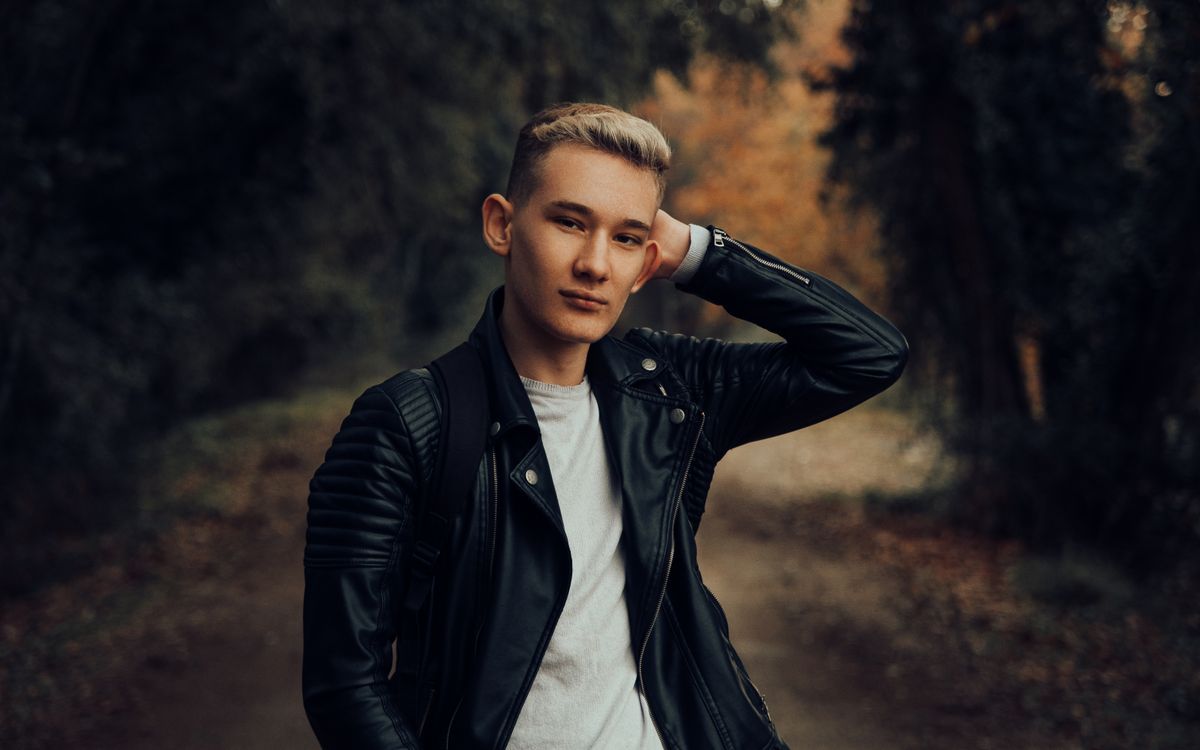
A jacket like the Buneri Original RAF Flying Sheepskin Jacket in Grey and Black Shearling is built for exactly this stretch of the year, layered over a light sweater on the coolest mornings and worn on its own once the afternoon settles into double digits.
Deep Winter: Near or Below Freezing, the Case for Shearling
Once temperatures approach or cross freezing, an unlined leather jacket alone stops being enough for most people. This is where a shearling or sheepskin lined leather jacket changes the equation completely, since the natural wool lining traps body heat the way the leather shell alone never could. It is also the point where the classic aviator or flying jacket silhouette, originally designed for exactly this problem at high altitude, makes the most practical sense on the ground.
A piece like the Buneri Black Winter Shearling Leather Fur Jacket is built for this end of the scale specifically, with a dense shearling interior that keeps working well below freezing, long after an unlined jacket would have given up.
Rain, Wind and Humidity: The Numbers Are Not the Whole Story
Temperature alone only tells part of the story. A dry, sunny 10C afternoon feels completely different from a windy, damp 10C evening, even though the thermometer reads exactly the same. Wind strips heat away far faster than still air, which is why a leather jacket that felt perfect on a calm day can suddenly feel thin the moment a breeze picks up.
Rain adds a separate consideration entirely. A brief, light shower is rarely a problem: most finished leather sheds a small amount of water and simply needs a wipe down afterward. Long, steady rain is different, since prolonged moisture can dull the surface finish and, if the jacket dries too quickly near a radiator or heater, leave the leather feeling stiff afterward. Treating a jacket with a leather specific waterproofing spray before the rainy season starts is a small step that avoids most of that damage entirely.
How to Dress for Leather Jacket Weather: A Practical Checklist
- Check the actual temperature, not just the season. A 14C day in March and a 14C day in November call for the exact same jacket, regardless of what the calendar says.
- Add wind and humidity to your mental math. Subtract a few degrees from how the day will feel if it is windy or damp near water.
- Layer for anything under 10C. A thin merino wool sweater underneath adds warmth without bulk and buys you another five or six degrees of comfort.
- Switch to shearling once you are near freezing. An unlined jacket is simply the wrong tool for sustained cold below about 5C.
- Go lighter, not heavier, above 20C. A suede bomber worn open beats a fully lined jacket zipped up every time the day turns genuinely warm.
- Waterproof before the rainy season, not during it. A quick spray treatment in early autumn saves the finish all winter long.
Conclusion
Leather jacket weather is not really about spring, summer, autumn or winter, it is about the number on the thermometer and what is blocking the wind between you and it. Somewhere between 8C and 18C, an unlined or lightly lined jacket is exactly right. Push past 20C and it is time to go lighter or leave it home. Drop below 5C and shearling stops being a style choice and starts being the only sensible one. Once you think in degrees instead of seasons, choosing the right jacket for the right day gets a lot easier, and the jacket itself lasts a lot longer for it.
Frequently asked questions
What temperature is leather jacket weather?
Most people find an unlined or lightly lined leather jacket comfortable between about 8C and 18C (46F to 64F). Below that range you will want a knit layer underneath or a shearling lined jacket, and above roughly 20C a full leather jacket starts to feel too warm for anything but a short walk. These numbers shift a little with wind, humidity and how fast you are moving, but 8C to 18C is the sweet spot most owners land in.
Can you wear a leather jacket in the rain?
A short, light shower is not a problem for most aniline or semi aniline finished leather, since a quick wipe with a dry cloth afterward is enough. Steady, heavy rain is different: water that sits on the surface for a long time can dull the finish and, if the jacket is not dried properly, leave the leather stiff. If you know rain is coming, treat the jacket with a leather specific waterproofing spray beforehand, and always let a wet jacket air dry away from direct heat rather than on a radiator.
What temperature is too hot for a leather jacket?
Above roughly 22C to 24C, leather stops breathing the way cotton or linen does, and most people start to feel genuinely warm inside a full jacket within twenty or thirty minutes. If you love the look in warmer weather, a lighter weight leather or suede bomber worn open over a t shirt gets you closer to the aesthetic without the heat of a fully lined jacket.
What temperature is too cold for an unlined leather jacket?
Below about 5C, an unlined leather jacket alone starts to lose the battle against the cold, since leather itself has very little insulating power and mostly blocks wind rather than trapping warmth. Once temperatures drop toward freezing and below, a shearling or sheepskin lined leather jacket, or a leather jacket worn over a proper wool sweater with a scarf, becomes the more realistic option than an unlined shell on its own.