
Stand next to the same leather jacket in two different collar cuts and the whole silhouette changes before you even notice the fit. The collar is the part of a jacket that sits closest to your face, which means it does more work shaping how the jacket reads on you than almost any other detail, yet it is usually the last thing shoppers think about. Once you understand the handful of collar styles that actually exist on leather jackets, and what each one does for your neckline, your face shape and your layering, choosing between a jacket with or without a collar stops being a guess and starts being a decision you can explain.
The collar is the frame around your face. Get that one detail right and the rest of the jacket has an easier job.
What Are the Main Leather Jacket Collar Styles?
Leather jackets are built with a fairly small set of collar constructions, and once you can name them, spotting the differences in a product photo takes seconds.
Stand Collar
A stand collar is a short band of leather, typically one and a half to two inches tall, that stands upright around the neck rather than folding over. It never opens into lapels. This is the collar most associated with a biker or bomber leather jacket, and it is the direct answer to a Lederjacke mit Stehkragen, a jacket built specifically with this upright, structured neckline. Because it sits close to the throat, a stand collar offers real wind and cold protection when zipped all the way up, and it gives off a cleaner, slightly more technical or military look than a folded collar. It also tends to be the most forgiving style for narrower faces, since the vertical line elongates rather than widens.
Band Collar
A band collar is closely related to a stand collar but usually sits a touch lower and narrower, closer to a shirt collar band without the fold. On leather jackets it often appears on more casual, understated pieces where the designer wants a hint of structure at the neck without the fuller biker look. It is a good middle ground if a full stand collar feels too formal or too tall for your neck length.
Notch Collar
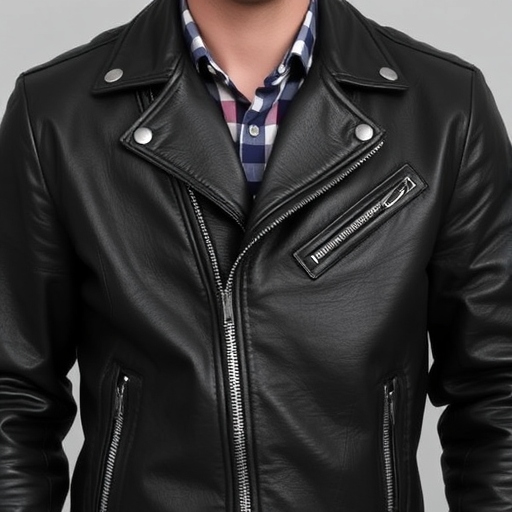
A notch collar folds down and outward into two lapels, with a visible V shaped notch where the collar meets the front zip or button closure, exactly like the collar on a blazer. This is the classic answer to giacca di pelle con colletto, a leather jacket with a proper folded collar rather than a plain neckline. Notch collars read as more traditional and slightly dressier, and they pair naturally with a shirt or turtleneck worn open at the top. They also add visible width across the upper chest, which flatters narrower shoulders.
Collarless (No Collar)
A collarless jacket has no raised or folded panel at all, just a simple, usually bound or piped edge running around the neckline. This is the direct match for kurtka skórzana bez kołnierza and for anyone specifically searching for a jacket ohne Kragen. It gives the cleanest, most minimal silhouette of the four styles, sits flat against the neck, and is the easiest to layer under a scarf, a heavier coat, or a high turtleneck in cold weather since there is no bulk competing for space around your throat.
Leather Jacket With or Without a Collar: Which Should You Choose?
This is the question behind most of the searches for a Lederjacke mit or ohne Kragen, and the honest answer is that it comes down to face shape, layering habits and the rest of your wardrobe rather than one style being universally correct.
- Choose a jacket with a collar (stand, band or notch) if you have a rounder or fuller face and want a vertical line near the jaw, if you tend to wear the jacket zipped or buttoned high, or if you like a more structured, slightly formal edge to a casual leather piece.
- Choose a collarless jacket if you have a longer or narrower face where extra structure at the neck adds unwanted length, if you layer heavily with scarves, hoods or turtlenecks, or if you specifically want the cleanest, most modern silhouette with nothing competing for attention around your neckline.
A simple test: put the jacket on, zip it fully, and look only at the space between your jaw and your shoulders in a mirror. If a collar makes that space feel busy or cramped, go collarless. If your neckline looks bare or the jacket seems to be missing a detail without one, a collar is doing real work for your proportions.

A jacket like the Buneri Black Leather Stand Up Collar Biker Jacket is a useful reference for how a stand collar actually looks and behaves once it is zipped, rather than laid flat in a catalogue photo.
Stand Collar vs Notch Collar: Key Differences
These two styles get compared constantly, because they are the two most common collar treatments on leather jackets and they send noticeably different signals, which is exactly the comparison behind giacca di pelle collo alto versus giacca di pelle con colletto.
| | Stand Collar | Notch Collar | |—|—|—| | Shape | Upright band, no fold | Folds into lapels with a visible notch | | Feel | Technical, biker, streamlined | Classic, slightly dressier, blazer-adjacent | | Best worn | Zipped high, close to the throat | Open at the top, over a shirt or knit | | Face shape it favors | Narrower, angular faces | Rounder or softer jawlines | | Wind protection | Higher, seals close to the neck | Lower, gaps at the lapels when open |
Neither style is more “correct” for leather specifically; motorcycle and aviation heritage pieces lean toward stand collars for function, while heritage sportcoat-inspired leather jackets lean toward notch collars for a dressier finish. A Buneri Black Leather Standing Collar Jacket shows the stand collar approach clearly: close to the neck, no lapel, built to be worn zipped.
A Practical Checklist for Choosing Your Collar Style
Run through this short sequence before buying, whether you are shopping in person or from photos alone.
- Look at your jawline in a mirror. Rounder or fuller faces generally benefit from the vertical structure of a stand or band collar; narrower or longer faces often look better collarless or with a notch collar that adds width.
- Think about how you actually wear jackets. If you zip up fully in cold weather, prioritize a stand collar for warmth. If you almost always wear jackets open over another layer, a notch collar or collarless cut will show off what is underneath.
- Check your existing scarves, hoods and turtlenecks. Bulky neck layers compete with a tall stand collar; a collarless jacket leaves more room.
- Match the collar to the jacket’s overall style. A biker or bomber silhouette usually wants a stand collar to stay authentic; a more tailored, sportcoat-style leather jacket usually wants a notch collar.
- Try it zipped and unzipped. A collar that looks great open can look bulky or awkward zipped to the top, and vice versa, so test both states before deciding.
- Consider the season. Stand collars earn their keep in genuinely cold climates; collarless and notch collar jackets are more forgiving in mild weather when the jacket spends most of its life open.
Common Mistakes When Choosing a Collar Style
The most frequent mistake is buying based purely on how a jacket looks on a hanger or in a flat product photo rather than zipped up on an actual body, since a collar’s real effect only shows once it is framing a jaw and neck. The second is ignoring layering habits entirely; a beautiful stand collar becomes a liability if you already wear thick scarves every winter and it simply gets pushed out of shape underneath one. The third is assuming a collarless jacket looks unfinished, when in practice a clean, well cut collarless piece like the Buneri Black Leather Standing Collar Jacket Ii style range shows that a strong collar or its deliberate absence is a design choice, not a missing feature.

Collar Details That Affect Comfort and Durability
Beyond the basic shape, a handful of small construction details decide how a collar actually performs over years of wear, and they are worth checking regardless of which style you land on.
- Snap tabs and throat latches. Many stand collar jackets add a small snap or hook at the very top, letting you close the collar fully against wind without zipping the entire jacket to the chin. This detail matters far more in practice than it looks like it should in a photo, especially on motorcycle or commuter jackets worn outdoors in changing weather.
- Corduroy or fabric-lined collars. Some notch and band collars are lined on the underside with corduroy or a soft brushed fabric rather than raw leather, which stops the collar from chafing the back of the neck and keeps it more comfortable against skin during long wear.
- Shearling or fleece trim. A handful of stand and notch collar jackets add a strip of shearling or faux fur along the inside edge for cold-weather warmth. This adds real bulk, so it suits a roomier jacket cut better than a slim, tailored silhouette.
- Stitching at the collar base. This is the part of the jacket that flexes every single time you turn your head, so it should have reinforced, double-row stitching where the collar meets the body panel. A collar that is only single stitched here is usually the first place a leather jacket starts to show wear.
- Collar stiffness over time. Full grain and top grain leather collars soften and mold slightly to your neck shape after regular wear, while a bonded or heavily coated leather collar tends to stay stiff or start cracking at the fold line within a season or two.
Checking these details takes an extra minute during a purchase and tells you far more about long-term comfort than the collar shape alone.
Conclusion
Leather jacket collars fall into four practical categories: the upright stand collar, the shorter band collar, the folded notch collar with lapels, and the clean collarless neckline. Each one changes the way a jacket sits around your face and shoulders, and each answers a slightly different question, whether that question was originally asked in English, German, Polish or Italian. Try a jacket zipped and unzipped in front of a mirror, weigh it against your layering habits and face shape using the checklist above, and the right collar style stops being a style guess and becomes an easy, obvious call.
Frequently asked questions
Should I get a leather jacket with or without a collar?
It depends on your face shape, your layering habits and the look you want. A jacket with a collar, whether stand, band or notch, adds structure around the neck and works well if you tend to wear the jacket open over a shirt or hoodie, since the collar frames the collarbone area nicely. A collarless jacket gives a cleaner, more minimal silhouette that suits round or fuller faces particularly well, and it layers more easily under a scarf or a heavier coat in winter. Neither is objectively better; try both against your jaw and shoulder line in a mirror and the answer usually becomes obvious fast.
What is a leather jacket without a collar called?
It is usually called a collarless leather jacket, sometimes a round neck or crew neck leather jacket, and it typically has a simple bound or piped edge circling the neckline instead of any raised or folded fabric. Some collarless biker jackets keep a very short standing band at the back of the neck for structure while leaving the front completely open, so it is worth checking product photos closely since the exact cut varies between brands.
What is a stand collar on a leather jacket?
A stand collar, sometimes called a mandarin or Nehru style collar, is a short strip of leather that rises straight up around the neck without folding over, usually one and a half to two inches tall. It gives a clean, structured, slightly military or officer look, sits close to the neck for genuine wind protection, and is a common choice on biker and bomber style leather jackets because it does not flap around at speed the way a notch collar can.
What is the difference between a notch collar and a stand collar leather jacket?
A notch collar folds down and out to form lapels with a visible V shaped gap, or notch, where the collar meets the front closure, similar to a blazer. A stand collar stays upright and close to the neck and never folds into lapels. Notch collars read as more classic and slightly dressier and pair naturally with a shirt underneath, while stand collars feel more technical, streamlined and biker inspired and work better zipped fully to the chin.