

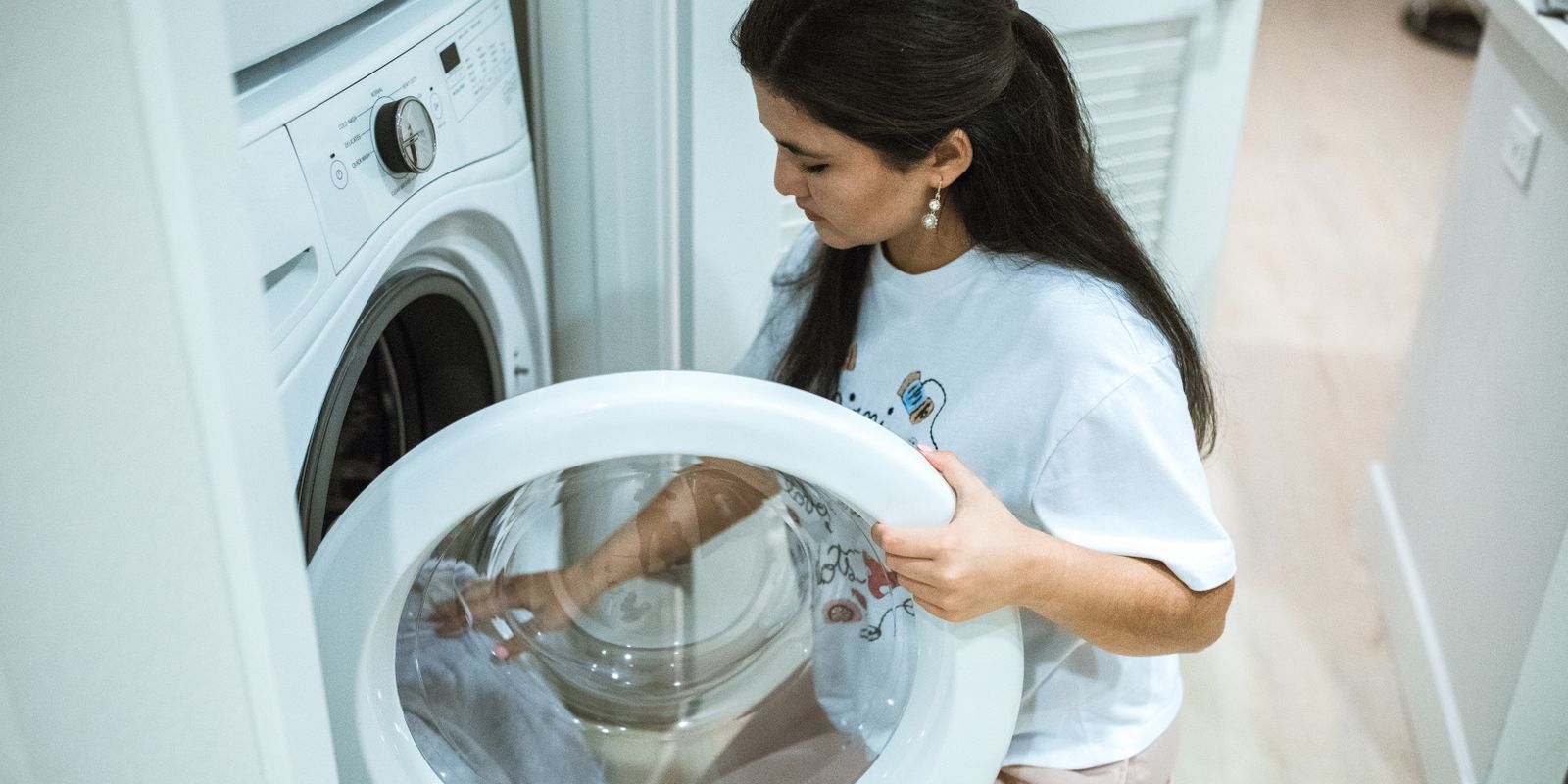
It is laundry day, the pile is bigger than usual, and there is a leather jacket sitting on top of it that has not been cleaned in months. The washing machine is right there, already running, and the question comes almost automatically: can you just throw the leather jacket in with everything else? The honest answer is no, and understanding why will save you a jacket that a proper wash cycle would otherwise ruin in about forty minutes. This guide walks through exactly what happens if you machine wash real leather, how suede and faux leather differ, and the correct way to get a leather jacket properly clean without a washing machine anywhere near it.
Leather is skin, not fabric. It reacts to water, heat and agitation the way skin does: it dries out, tightens and cracks.
The short answer: no, do not machine wash a leather jacket
Real leather is not designed to survive a wash cycle. Every washing machine setting, even the gentlest cold cycle, combines three things leather cannot tolerate at once: prolonged water exposure, mechanical agitation and detergent. Any one of those alone is manageable in small doses. Together, in a spinning drum for thirty or forty minutes, they strip the natural oils out of the hide, break down the fibres that keep it flexible and leave the jacket stiff, cracked and often a noticeably smaller size once it dries.
This applies whether the jacket is a lightweight lambskin bomber or a heavier cowhide biker jacket. Thickness changes how visible the damage is, not whether it happens. A thinner, softer leather can actually show cracking and shrinkage faster than a thick, sturdy hide, because it has less material to absorb the stress of drying out unevenly.
What actually happens if you put leather in the washing machine
It helps to know exactly what goes wrong, because it explains why the usual laundry tricks (a gentle cycle, cold water, no spin) do not really fix the problem.
- The oils leach out. Leather stays soft because of natural oils worked into the hide during tanning. Water and detergent wash those oils out, the same way repeated hand washing dries out human skin.
- The fibres tighten as they dry. As the water evaporates, the collagen fibres in the leather pull together and shrink, which is why a washed jacket often comes out noticeably tighter through the shoulders and sleeves.
- The surface cracks. Once the oils are gone, the leather loses flexibility. Bend a stiff, dry-out jacket at the elbow and the surface can visibly crease and crack rather than fold smoothly.
- Colour and finish shift. Dyed and finished leathers can patch, lighten or darken unevenly after a soak, especially if the jacket has any waxed or distressed coating.
- Hardware and lining suffer too. Metal zips and studs can rust from prolonged water contact, and stitched linings can shrink at a different rate than the leather shell, causing the jacket to pucker at the seams.
None of this is reversible with a quick fix. A jacket that has been through a full wash and dry cycle usually needs professional reconditioning at best, and in many cases the shrinkage and cracking are permanent.
Real leather vs faux leather vs suede: does the answer change?
Genuine leather (lambskin, cowhide, goat)
Everything above applies in full. Genuine leather jackets, the kind Buneri makes, are never machine washable. That is true of a classic biker cut like the Black Leather Biker Jacket For Women, and it is equally true of a heavier, waxed piece like the Rust Brown Classic Waxed Leather Jacket, where the wax coating itself can strip away in water, leaving patchy, dull leather underneath that needs to be rewaxed from scratch.
Faux leather (PU, vegan leather)
Faux leather is a plastic coating over a fabric base, so it behaves very differently. Many faux leather jackets can survive a gentle, cold, low-spin cycle inside a pillowcase, but always check the care label first, since some faux leathers have foam backing that breaks down in water regardless. If there is no care label, treat it the same as real leather and clean it by hand to be safe.
Suede
Suede is real leather with a napped, brushed finish, and it is arguably more sensitive to water than smooth leather, not less. Water leaves visible dark rings and watermarks on suede that are difficult to lift, and any spinning or tumbling crushes the nap flat in patches that do not brush back out easily. A suede piece such as the Classic Suede Trucker Jacket should only ever be cleaned with a dry suede brush, a suede eraser for stains, and specialist suede products, never a washing machine and never a soaked cloth.
How to actually clean a leather jacket at home
Skipping the washing machine does not mean the jacket has to stay dirty. Real leather responds well to the right routine, done regularly rather than left until it desperately needs it.
Daily and weekly upkeep
A soft, barely damp microfibre cloth wiped over the whole jacket lifts dust, city grime and light surface marks in a couple of minutes. Do this after wearing the jacket somewhere dusty or smoky, and it prevents build-up that would otherwise need a heavier clean later.
Spot cleaning stains
For an actual stain, food, drink, mud, apply a small amount of proper leather cleaner to a soft cloth, never directly onto the jacket, and work it into the mark in small circular motions. Test it on an inside seam or cuff first to make sure it does not affect the colour. Wipe away any residue with a second, clean, dry cloth, and let the area air dry naturally.

Conditioning
Leather needs the oils replaced that daily wear and the occasional clean removes. A dedicated leather conditioner, applied every few months with a soft cloth and buffed in gently, keeps the hide flexible and prevents the exact cracking that a washing machine causes. Jackets worn heavily through winter benefit from conditioning more often than ones worn occasionally.
A structured, well-made jacket holds up best
Jackets built with a strong leather grade and clean construction tolerate a proper hand-cleaning routine far better than cheaper, thinner hides, which is one more reason to invest in a well-made piece from the start. A tailored option like the Rust Brown Classic Waxed Leather Jacket is built to be re-waxed and reconditioned over years, rather than replaced the first time it needs a proper clean.
My jacket already went through the wash, what now?
If it is too late and the jacket has already been through a cycle, do not put it in the dryer next, that will only lock in the damage with heat. Instead:
- Take it out immediately and gently reshape it on a wide hanger while it is still damp, easing the shoulders and sleeves back toward their normal shape.
- Let it air dry slowly, away from direct sun, radiators or any other heat source, which can take a full day or two.
- Once fully dry, apply a generous amount of leather conditioner in several thin layers rather than one heavy coat, giving the hide time to reabsorb moisture and flexibility.
- Check for cracking, especially at stress points like the elbows and cuffs. Light cracking sometimes improves with repeated conditioning over a few weeks; significant cracking or shrinkage usually needs a professional leather restorer.
When to call a professional leather cleaner
Some situations are worth handing to a specialist rather than fixing at home: a large grease or oil stain that has soaked in, a colour that has visibly patched or faded unevenly, a jacket that came out of the wash noticeably smaller, or any mould or mildew smell after the leather stayed damp too long. Professional leather cleaners have solvents and reconditioning treatments that go beyond what a home cleaning kit can safely do, and for a jacket that cost real money, the cleaning fee is usually far cheaper than replacing it.

Step-by-step checklist: safe home cleaning routine
- Never put a genuine leather or suede jacket in the washing machine, on any cycle or setting.
- Wipe the jacket down with a soft, barely damp cloth weekly if worn often.
- Spot clean stains with proper leather cleaner on a cloth, not directly on the leather, and test on an inside seam first.
- For suede, use a suede brush and suede eraser only, and keep it away from water entirely.
- Air dry any damp leather slowly and away from direct heat, never in a tumble dryer or in front of a radiator.
- Condition the leather every few months, more often in winter, to replace the oils regular wear and cleaning remove.
- Store the jacket on a wide hanger in a cool, dry space, not folded in a drawer or crushed in a bag.
- For serious stains, shrinkage or damage after an accidental wash, take it to a professional leather cleaner rather than attempting a second home fix.
Conclusion
The short version is worth repeating: a leather jacket and a washing machine should never meet, on any setting, at any temperature. Real leather, and suede even more so, needs the slower, gentler routine of a damp cloth, the occasional proper leather cleaner and regular conditioning to stay soft and last for years. Treat it that way from the start and a well-made jacket will outlast almost anything else in the wardrobe, without ever needing a wash cycle to begin with.
Frequently asked questions
Can a leather jacket be washed in a washing machine?
No. A genuine leather jacket should never go into a washing machine, on any setting. The drum’s spinning motion, the detergent and the amount of water strip the natural oils out of the hide, and the heat of most cycles can shrink or warp the leather permanently. Clean real leather by hand with a damp cloth and a proper leather cleaner instead.
What happens if you accidentally wash a leather jacket?
Expect stiffness, cracking, a rough or tacky surface, and visible shrinkage, especially around the shoulders and sleeves. The leather loses its natural oils in the wash and dries unevenly, which is why jackets that go through a full cycle often come out a size smaller and much harder to the touch. Do not put it in the dryer next. Reshape it while damp, let it air dry slowly, then condition it heavily once it is dry.
How do you clean a real leather jacket at home?
Wipe the whole jacket down with a soft, barely damp microfibre cloth to lift dust and surface grime. Treat any specific stains with a leather cleaner applied to a cloth, not directly onto the jacket, working in small circles. Let it air dry away from direct heat, then apply a leather conditioner to keep the hide supple. Never use a household detergent or submerge the jacket in water.
Can a suede jacket go in the washing machine?
No, suede is even less machine friendly than smooth leather. Water leaves dark rings and stains on suede, and any tumbling or agitation crushes the nap permanently. Clean suede with a dedicated suede brush and a suede eraser for marks, and use a suede protector spray to guard against future spills. Deep stains on suede are best left to a professional cleaner.