


Leather is a natural material, which is exactly why it can surprise you. One morning your favourite jacket squeaks like a new pair of shoes. A few weeks later you spot a faint green tinge near the zip, or a chalky white haze across the shoulders, or the whole thing suddenly looks glassy and over-shiny. Some owners even swear their jacket foamed in the rain. None of these things means your jacket is ruined. They are all common, well-understood reactions of a living hide to friction, metal, damp and time. This guide walks through ten of the strangest leather jacket problems, explains in plain language why each one happens, and gives you a simple, safe fix for every single one.
Almost every strange leather jacket problem comes down to four ordinary things: dryness, metal, moisture and old product. Understand those four, and nothing your jacket does will ever scare you again.
Why Does a Leather Jacket Squeak or Creak?
A squeaking leather jacket is one of the most surprising problems, because it sounds like something is broken when nothing is. The noise is simply friction. When two dry surfaces of leather rub together, at the shoulder seams, the inside of the elbow or where a zip meets its leather surround, the fibres catch and drag instead of gliding, and that drag makes a creak.
It happens most on new jackets that have not broken in, on leather that has dried out a little, and in cold weather when the hide is stiffer. The good news is that it is one of the easiest problems to solve.
The fix is patience plus a little moisture. Wear the jacket often so it flexes and softens naturally, and work a thin, even layer of leather conditioner into the noisy areas and seams. Let it rest overnight and buff gently the next day. As the fibres relax and stay supple, they slide silently.
A supple, well-cut jacket breaks in faster and creaks less to begin with. The BUNERI Men’s Leather Lee Rider Casual Jacket is made from soft real sheepskin leather that moves with you from the first wear, so there is far less of that stiff, new-jacket friction.
Why Is My Leather Jacket Turning Green?
A green tint on leather looks alarming, but the cause is usually sitting right there in the hardware. Brass and copper zips, studs, rivets and buckles oxidise slowly when exposed to air and skin, forming a thin greenish film, the same verdigris you see on an old coin or a church roof. That film then rubs off onto the leather around it, leaving a faint green shadow near the metal.
It is not rot and it is not mould. To clear it, wipe the metal parts with a soft, dry cloth to lift the oxidation, then gently clean the stained leather with a cloth barely dampened in clean water and a whisper of mild soap. Dry it well and finish with a thin coat of conditioner. Keeping the hardware dry, and drying the jacket properly after rain, stops the green from coming back.
Why Is My Leather Jacket Turning White?
A white haze has three possible causes, and telling them apart is the whole battle.
The most common is a wax or fat bloom: natural oils and waxes in the hide migrate to the surface in cold or damp storage and dry as a pale film. A soft cloth and a thin coat of conditioner usually melt it straight back in.
The second is a salt line, the crusty white ring left after rain or winter slush dries on the leather. Wipe it with a cloth wrung out in a mix of clean water and a small splash of white vinegar, then condition.
The third, and the one to catch early, is mildew from being stored damp. It looks powdery and smells musty. Wipe it off with a cloth dampened in mild soapy water, let the jacket dry fully in open air away from direct heat, and store it somewhere dry with room to breathe.
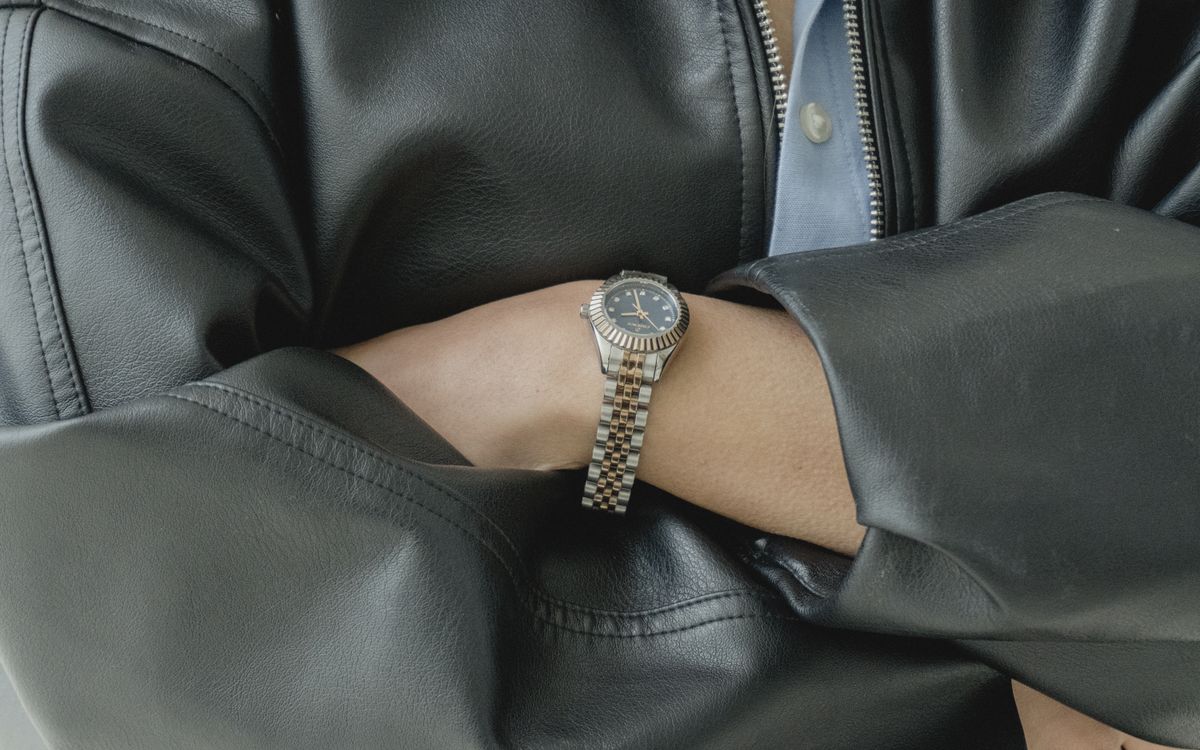
A well-finished jacket with a stable, breathable lining is far less prone to these blooms, because moisture is not trapped against the hide. The Women’s Olive Green Quilted Leather Jacket pairs real sheepskin leather with a neat quilted construction that hangs and airs beautifully, so it stores well between seasons.
Why Does a Leather Jacket Foam or Bubble in the Rain?
This is the strangest sounding problem of all, and yet the explanation is almost funny once you know it. A leather jacket foams in the rain because of soap that was never fully rinsed out. If the jacket was cleaned with saddle soap, detergent or a strong product and then not wiped down and buffed properly, a thin film of soap stays hidden in the grain. Rain reactivates it, and the water whips it into a light foam, exactly like a soapy sponge under a running tap.
The leather is fine. To stop it, remove the residue: go over the whole jacket with a cloth wrung out in clean, lukewarm water, repeating a few times to lift the soap, then dry it slowly at room temperature and finish with a light conditioner. After that, it will shed rain quietly and normally.
Why Is My Leather Jacket Too Shiny?
Too much shine comes from one of two places. Either product has built up, too much conditioner or polish sitting on the surface, or years of wear have burnished the grain to a natural gloss.
For product build-up, wipe the jacket with a cloth dampened in lukewarm water, let it dry, and use far less conditioner in future. A pea-sized amount covers a whole panel. For a natural worn shine you want to tone down, rub the area gently with a clean, dry microfibre cloth in small circles to even it out. Stay away from silicone sprays and cheap shine sprays, which sit on top and usually make things worse.
Five More Odd Problems, Quickly Solved
Beyond the famous five, a few more oddities show up often enough to name:
- Stiffness: cold or dryness makes leather board-like. Warm it by wearing it and feed it a thin coat of conditioner.
- Colour rubbing off: a little transfer on light shirts is common with new, deeply dyed leather. Buff off loose surface dye with a dry cloth, then seal with conditioner.
- Small cracks: these are thirst. Never force dry leather near a radiator, condition it in thin layers and let it recover slowly.
- A musty smell: almost always damp storage. Air the jacket, wipe the lining, and store it dry with space around it.
- Sagging or stretched cuffs: usually from hanging wet or on a thin wire hanger. Use a broad wooden hanger and never store it damp.

Choosing a well-made jacket from the start heads off most of these small dramas. The Women’s Black Collarless Leather Jacket is cut from soft, supple sheepskin leather that stays flexible and holds its shape, so it is slow to stiffen, crack or sag.
Your Quick Leather Rescue Checklist
Keep this short routine in mind and most problems never take hold:
- Wear it, do not hide it. Regular wear keeps leather supple and stops squeaks, stiffness and cracks.
- Condition lightly, twice a year. A thin, even coat feeds the hide. Too much causes shine and bloom.
- Dry slowly, never with heat. Blot rain with a towel and let it dry at room temperature, away from radiators and sun.
- Keep metal dry. Wipe zips and studs after rain to stop green oxidation transferring.
- Rinse out any cleaner. After any wash, wipe the leather with clean water so no soap is left to foam later.
- Store it breathing. Use a broad hanger, leave space around it, and keep it somewhere dry and airy, never a sealed plastic bag.
The Bottom Line
Leather jackets do strange things because leather is alive, or was, and it still reacts to friction, metal, moisture and old product long after it leaves the animal. A squeak, a green shadow, a white haze, a burst of rain foam or an over-glossy panel are not signs of a ruined jacket. They are ordinary, fixable reactions with ordinary, gentle solutions. Treat your leather kindly, condition it lightly, dry it slowly and store it with room to breathe, and a good jacket, like the real sheepskin ones Buneri hand-makes to order, will outlast every one of these little surprises.
Frequently Asked Questions
Why does my leather jacket squeak or creak when I move?
A squeak or creak is almost always about friction between two dry surfaces. New leather that has not broken in yet can rub against itself at the shoulders, elbows and under the arms, and the sound is the fibres dragging rather than gliding. It is more common when leather is a little dry, when a lining has stiffened, or when a zip and its leather surround press together. The fix is gentle and simple: wear the jacket often so it softens naturally, and apply a thin, even coat of a proper leather conditioner or cream, working it into the seams and fold points where the noise starts. Let it soak in overnight, then buff lightly. As the fibres relax and stay supple, they glide instead of catching, and the squeak fades. Never soak the leather or use oils meant for boots, since too much oil can darken the hide and make it heavy.
Why is my leather jacket turning green or white?
These two colour changes have different causes. A green tint usually comes from metal hardware. Brass or copper zips, studs and buckles slowly oxidise, and that greenish film, a bit like the patina on an old coin, can rub onto the leather around it. Wiping the metal clean and keeping it dry stops it spreading. A white haze is different: it is often a bloom of natural fats and waxes rising to the surface in cold or damp storage, or a ring of dried salt after rain or snow, or in the worst case a light mildew from being stored damp. A soft cloth, a barely damp wipe and a thin coat of conditioner usually lift a wax bloom or salt mark. For mildew, wipe with a cloth lightly dampened with a mild soap solution, dry the jacket well away from direct heat, and let it air. Good airflow and dry storage prevent all three.
Why does my leather jacket foam or bubble in the rain?
Foaming in the rain is a sign of leftover cleaning product, not a fault in the leather itself. If a jacket has been washed with saddle soap, detergent or a strong cleaner and not rinsed and buffed properly, a thin film of soap stays in the grain. When rain hits it, the water lifts that residue and it foams, just as a soapy sponge does under a tap. The cure is to remove the residue: wipe the jacket down with a cloth wrung out in clean lukewarm water, going over it a few times to lift the soap, then let it dry slowly at room temperature and finish with a light conditioner. Once the old product is gone, the leather sheds rain normally. Buneri jackets are real sheepskin leather, so treat them gently and avoid harsh soaps in the first place.
My leather jacket is too shiny. How do I make it look matte again?
A jacket usually turns too shiny for one of two reasons: too much conditioner or polish sitting on the surface, or years of natural buffing from wear that has burnished the grain. If it is product build-up, wipe the jacket with a cloth dampened in lukewarm water to lift the excess, let it dry, then apply conditioner very sparingly in future, a pea-sized amount for a whole panel. If it is a natural, worn-in shine you dislike, a gentle rub with a clean, dry microfibre cloth in small circles will knock back some of the gloss and even it out. Avoid silicone sprays and cheap shine products, since they sit on top and often make the problem worse. A soft, matte finish is really just clean, well-conditioned leather that has not been overloaded, so less is always more.