
Ask what a real leather jacket costs and you will get answers from 80 euros to 8000, which helps nobody. So here is the honest version up front: a genuine leather jacket that is properly made starts at around 200 euros, most excellent everyday pieces live between 250 and 600, and premium shearling or designer work climbs from there. The real leather jacket cost question is really two questions: what are you paying for, and where does paying more stop making sense? This guide answers both.
You are not paying for a jacket. You are paying for an animal hide, weeks of tanning and hours of skilled hands, and every euro shows up somewhere.
The honest price ranges
Think of the market in four broad bands. Under about 150 euros, true leather is rare. What you usually find there is polyurethane, bonded scraps pressed with glue, or paper thin split leather that cracks within a couple of seasons. It looks the part on day one and rarely on day four hundred.
From roughly 200 to 400 euros you enter real territory: genuine sheepskin, goatskin or cowhide jackets with proper linings, reinforced stitching and decent hardware. This is where most people should buy, because the jump in lifespan compared with the band below is enormous. A classic piece like the men’s cafe racer black classic biker jacket sits in this everyday sweet spot, real hide, clean construction, nothing inflated.
From 400 to 800 euros you are paying for finer raw material and more labour: full lambskin, thick suede, fur trims, more complex patterns with extra panels and detail work. Above that, into four figures, you have designer fashion, where a growing share of the price buys the name on the label rather than a better hide.
What actually drives the cost
The hide itself
Leather is the single biggest cost in the garment, and unlike fabric it cannot be woven to order. A jacket needs one or more full hides, and the price moves with the animal and the grade. Lambskin is soft, light and expensive because the skins are small and delicate, so a jacket may need several. Cowhide is tougher and cheaper per square metre. Sheepskin with the wool left on, the shearling used in aviator jackets, is the costliest of all, because you are buying leather and natural insulation in one piece. Grade matters too: clean, uniform hides with few scars fetch far more than corrected leather that has been sanded and coated to hide flaws.
Tanning, the invisible weeks
Between the farm and the sewing table sits the tannery, and this is where much of the money quietly goes. Turning raw skin into supple, stable leather takes chemistry, water, energy and time. Chrome tanning takes days, vegetable tanning can take months, and the finishing that follows, dyeing all the way through, softening, waxing, gives the jacket its colour depth and its feel. Cheap jackets skip steps here, which is why their surface often looks plastic and ages badly instead of developing character.
Cutting and sewing
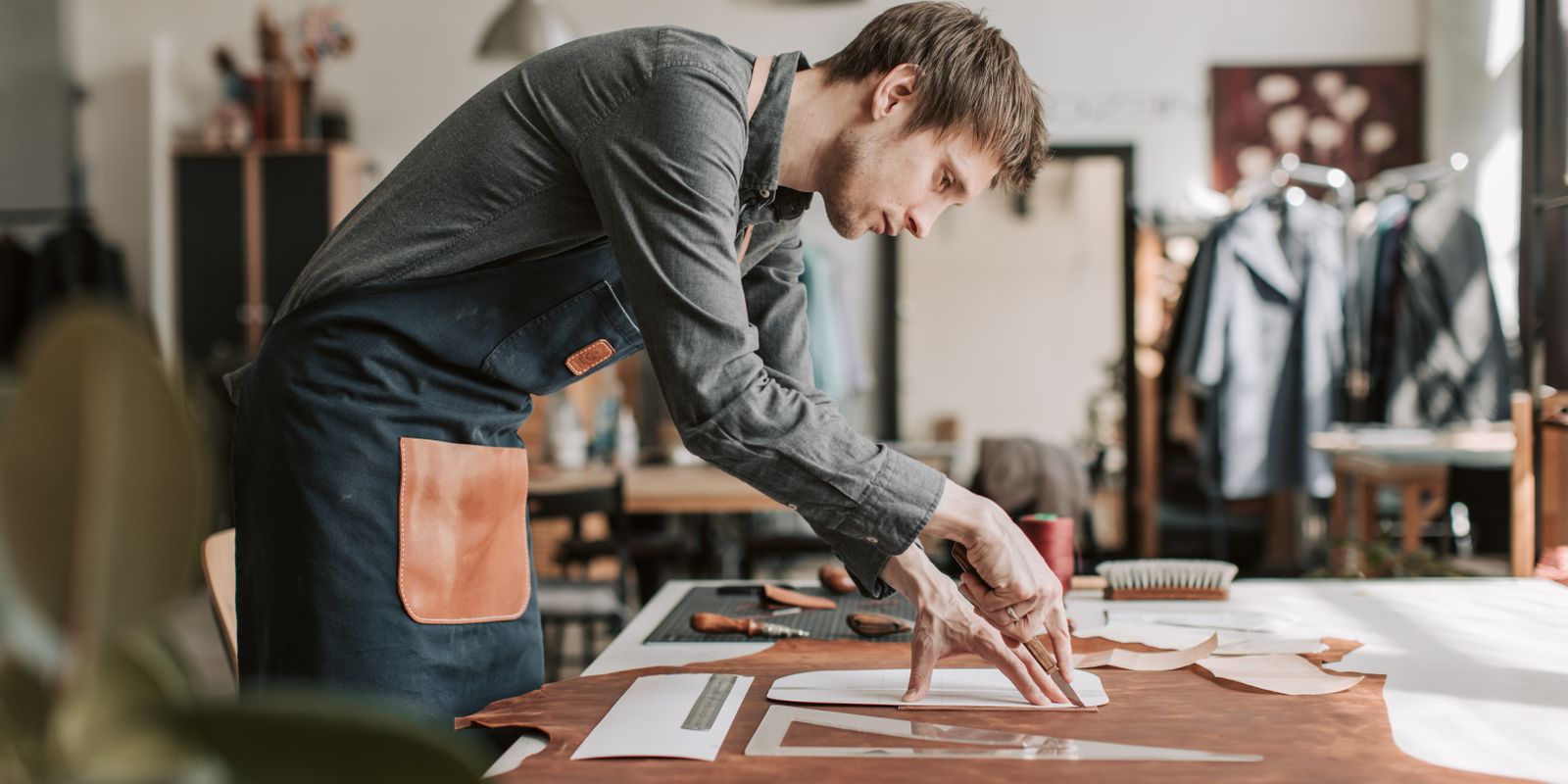
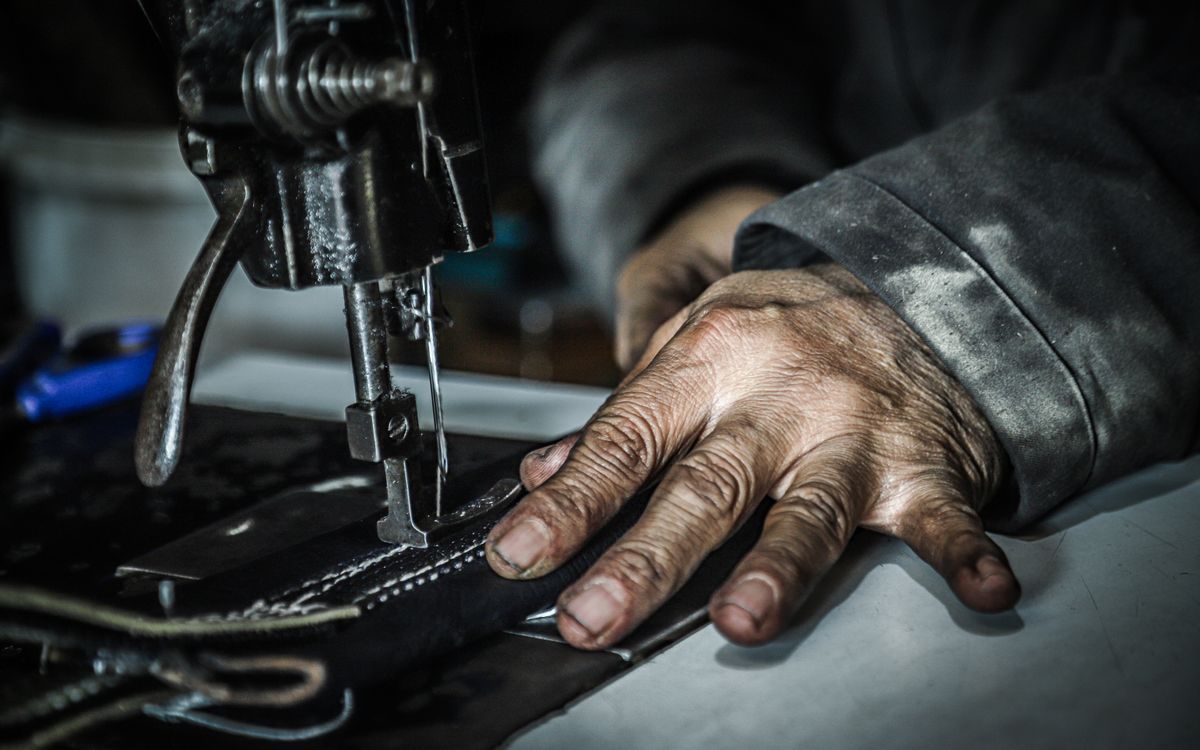
Leather punishes mistakes. A seam unpicked from fabric leaves no trace, but every needle hole in a hide is permanent, so leather is cut and sewn by experienced hands, slowly. A well made jacket contains dozens of panels that must match in grain and shade, reinforced stress points, a proper lining and hardware that will outlive the fashion cycle. Details you barely notice, a smooth heavy zip, taped seams, a collar that sits right, each add minutes or hours of labour. It is exactly the difference you can feel in a mid tier piece such as the brown men’s suede flight bomber jacket, where the money went into the suede and the make rather than a logo.
The brand tax
Finally there is the part of the price that has nothing to do with the jacket: advertising campaigns, flagship stores, wholesale margins and the licence to wear a famous name. On a 300 euro jacket from a specialist maker this share is small. On a 2500 euro designer piece it can be most of the ticket. That is not a scandal, fashion has always sold identity, but it is worth knowing which part of your money buys leather and which part buys the label.
The cost per wear argument
Here is the calculation that changes most minds. A 60 euro faux leather jacket that peels after two winters costs you 30 euros a year, and then you buy again. A 400 euro real leather jacket worn for fifteen years costs under 27 euros a year, looks better in year ten than in year one, and never joins the landfill pile in between. Stretch the timeline and the expensive jacket is the cheap one.
Premium pieces push this logic further. A heavy shearling overcoat is a serious outlay, yet it replaces both a winter coat and a jacket, lasts decades with basic care and barely dates. Something like the men’s black sheepskin overcoat with white shearling interior is the clearest example of price and value pointing in the same direction: maximum material, maximum warmth, a lifetime of winters.
What each style should cost
Price expectations shift with the cut, because the cut decides how much hide and how much labour go in. A classic biker or cafe racer is the most efficient shape in leather: compact panels, a fitted cut, modest material use. In real leather, expect roughly 200 to 350 euros for an honest one, and treat anything far below that as a materials question, not a bargain.
Bomber and aviator jackets sit a step higher. The fuller cut takes more hide, the ribbed cuffs and heavier zips add hardware cost, and suede versions add the expense of a delicate finish. Around 250 to 450 euros is the healthy zone. Leather blazers and long coats climb again, simply because a knee length coat can swallow two to three times the hide of a biker jacket.
At the top stand shearling and sheepskin pieces. Here the material is the insulation, whole wool-on skins that cost more per panel than most finished jackets, plus the extra skill of sewing thick, dense seams. A genuine shearling aviator or overcoat under 400 euros should make you suspicious; a fair range runs from around 500 into four figures, and it earns that money back over decades of winters.
How to pay a fair price
A few habits protect your wallet better than any discount code. First, read the label: only “real leather”, “genuine leather”, “lambskin”, “sheepskin” or “cowhide” mean an animal hide, while “PU”, “vegan leather” and “bonded leather” do not. Second, smell and touch where you can; leather has a warm, unmistakable scent and slight natural variation across the surface, plastic smells of nothing and looks eerily even.
Third, check the parts that fail first: the zip should be metal and run smoothly, seams should be straight with no loose threads, and the lining should be sewn in, not glued. Fourth, weigh the source. Specialist leather makers who sell directly, without boutique rent and wholesale layers built into the price, routinely deliver the 600 euro standard of make at half that number. And finally, ignore theatrical discounts: a jacket “reduced” from 900 to 250 was never a 900 euro jacket.
Where the money goes, at a glance
- Hide: the largest share, and the first thing cut when a jacket is suspiciously cheap.
- Tanning and finishing: weeks of processing that decide how the jacket feels and ages.
- Cutting and sewing: skilled, slow work, every hole permanent, every panel matched.
- Hardware and lining: zips, studs, stitching and inner fabric, small costs that decide daily comfort.
- Brand and retail: the flexible share, from modest at direct-to-customer makers to dominant at designer houses.
Conclusion
A real leather jacket costs what a real material, real time and real skill cost, and the price bands make sense once you see where each euro goes. Spend around 200 to 400 for an honest everyday jacket, more when finer hides or shearling warmth genuinely matter to you, and be sceptical at both extremes, the too cheap and the heavily branded. Buy once, buy real, and let fifteen years of wear do the maths for you.
Frequently asked questions
How much should I pay for a real leather jacket?
For a genuine leather jacket that will last, expect roughly 200 to 400 euros for a well made everyday piece, 400 to 800 euros for premium hides like full lambskin or shearling, and far more for designer labels. Below about 150 euros, you are usually looking at bonded leather, very thin splits or synthetic blends.
Why are real leather jackets so expensive?
A single jacket needs one or more full animal hides, weeks of tanning, skilled pattern cutting and hours of sewing with reinforced seams and quality hardware. Leather cannot be produced faster to meet demand the way woven fabric can, so the raw material alone costs many times more than polyester or PU.
Are expensive designer leather jackets better quality?
Not automatically. Past a certain point you pay for the label, the marketing and the boutique, not for a better hide. A 2000 euro designer jacket and a 500 euro jacket from a specialist maker often come from tanneries of a similar standard. Judge the leather, the stitching and the hardware, not the logo.
Does a higher price mean a warmer leather jacket?
Not directly. Price follows the hide and the work, not the insulation. A mid priced quilted or shearling lined jacket will keep you warmer than a thin designer lambskin at four times the price. If warmth is the goal, look at the lining and the leather thickness rather than the number on the tag.